Repaired drywall appears blotchy when porous joint compound absorbs paint at a different rate than surrounding wall paper. Applying a dedicated primer over repaired areas seals the surface and prevents uneven sheen variations.
Why Expert Drywall Repair Is the Foundation of Flawless Interior Painting in 2026
Have you ever spent days picking the perfect paint color only to find that your finished walls still showcase dents, hairline cracks, and visible seams?
Many homeowners believe that high quality paint acts like magic filler capable of masking wall damage. The truth is quite the opposite. Modern interior paints, trending low sheen finishes, and contemporary warm LED lighting actually magnify underlying imperfections. When paint cures, it shrinks tight against the substrate, revealing every tape joint, nail pop, and uneven patch beneath it.
As interior aesthetics in 2026 shift toward clean lines, minimalist warmth, and subtle earthy neutrals, smooth wall textures have become essential. Investing in skilled surface preparation before applying paint is the single most important decision for any residential renovation. Partnering with a dedicated local contractor like Park Ridge Painting Service guarantees that your living spaces achieve the refined, durable beauty you envision through expert interior painting.
Understanding the Importance of Substrate Health
Drywall forms the primary canvas for every room inside your home. Over time, seasonal humidity shifts across Cook County cause building framing to expand and contract. This subtle movement creates structural stress that manifests as corner cracks, loose joint compound, and popped fasteners.
Applying fresh paint over compromised drywall merely seals in damage rather than resolving it. Moisture changes, minor vibrations, and house settling will quickly cause those unaddressed cracks to reappear through your new paint coat.
Professional surface restoration addresses the root causes of wall wear. Technicians inspect for underlying stability, resecure loose panels to studs using specialized drywall screws, and reinforce weakened corners. By stabilizing the substrate first, your interior paint job remains pristine for years rather than months.
Common Drywall Issues That Ruin Interior Paint Finishes
Before picking up a roller, experienced painters evaluate interior walls for several widespread issues common to suburban Chicago homes.
1. Nail Pops and Screw Heads
Settling foundations and lumber shrinkage often push fasteners out from drywall studs. Simply tapping these fasteners back down with a hammer is a temporary fix that fails within months. Lasting repair requires sinking new screws adjacent to the popped fastener, securing the panel firmly, and removing or resetting the original nail before applying compound.
2. Hairline Cracks Along Seams
Settling cracks frequently form above doorframes, window corners, and ceiling joints. Covering these fissures with regular spackling paste rarely holds up against seasonal temperature swings. Long term durability demands embedding self adhesive fiberglass mesh or paper joint tape into fresh compound to absorb future structural shifts.
3. Water Damage and Plaster Deterioration
Past plumbing leaks or roof moisture leave drywall soft, swollen, and prone to mold growth. Deteriorated sections must be cleanly cut away, replaced with moisture resistant drywall, and blended seamlessly into surrounding vintage plaster or contemporary sheetrock. Older Park Ridge homes with original lath and plaster walls call for a different approach entirely, covered in our plaster repair and interior painting guide.
4. Surface Scuffs, Gouges, and Texture Inconsistencies
Furniture bumps, picture hangers, and child play areas leave noticeable dings. Without feathering joint compound outward across several inches, patches create visible mounds known as flashing once painted.
Modern Drywall Repair Trends Homeowners Love in 2026
The painting and renovation industry continues to evolve with advanced materials and dust containment solutions. Homeowners today expect work that respects their indoor living environment while delivering superior smoothness.
Dustless Sanding Systems
Traditional sanding fills homes with airborne gypsum dust that settles across furniture, vents, and electronics. In 2026, leading contractors utilize integrated vacuum sanding systems that capture up to ninety nine percent of particulate matter right at the abrasive surface. This keeps family members safe and maintains clean indoor air quality throughout the project.
Level 5 Smooth Wall Finishes
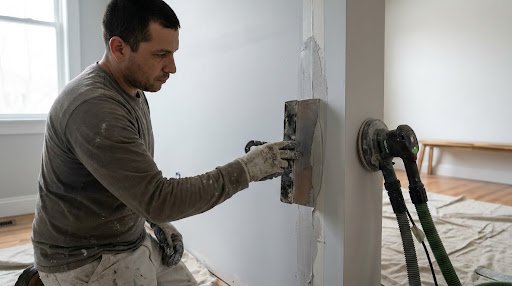
Textured walls and orange peel finishes have given way to ultra flat Level 5 finishes. A Level 5 finish involves skim coating an entire wall surface with a thin layer of specialized joint compound. This creates complete surface uniformity, eliminating texture contrasts between paper faces and patched areas. It is the premier standard for modern homes featuring large windows, raking light, and designer lighting fixtures.
Low VOC and Eco Conscious Compounds
Homeowners increasingly prioritize wellness and non toxic home products. Modern joint compounds and setting powders contain minimal volatile organic compounds, allowing families to enjoy newly renovated spaces without enduring harsh chemical odors. The same thinking now drives the topcoat, covered in our low VOC interior painting guide.
The Step by Step Professional Surface Preparation Process
Achieving a flawless paint finish requires technical precision, patience, and professional craftsmanship.
- Complete Room Protection: Reliable painters begin by covering floors with heavy duty drop cloths, sealing doorways with plastic sheeting, and protecting electrical outlets and baseboards.
- Damaged Area Extraction: Crumbling gypsum, loose paper tape, and failing previous patches are cut back to solid, stable material.
- Mechanical Fastening: Panels are anchored with specialized drywall screws directly into wall studs to eliminate panel deflection.
- Mesh and Mud Application: Professionals apply multiple thin coats of joint compound, letting each layer dry thoroughly while gradually widening the feathering radius.
- Precision Sanding: Surface areas are sanded smooth using fine grit abrasives and specialized lighting to detect micro ridges.
- Dedicated Primer Application: High solids primers seal porous compound patches so that topcoat paint absorbs evenly across the entire wall.
When homeowners need trusted assistance with wall restoration, utilizing professional drywall repair guarantees seamless blending and structural longevity.
Why Local Experience Matters in Park Ridge
Homes in Park Ridge showcase a distinct mix of historic brick bungalows, mid century ranches, and expansive modern custom builds. Each home type presents unique substrate challenges. Historic properties often feature heavy plaster walls over wooden lath, whereas newer constructions utilize standard sheetrock.
Working with a local team that has served the local community since 1985 brings invaluable insight. Seasoned professionals understand how cold Midwest winters and humid summer weather affect interior wall stability. Moreover, local, family owned contractors emphasize neat job sites, punctual schedules, and personalized customer care that national franchises cannot match.
Frequently Asked Questions (FAQs)
Standard joint compound requires twelve to twenty four hours per coat to cure completely, depending on indoor humidity and temperature. Quick setting compounds can cure within ninety minutes for faster multi coat applications.
Drywall that has absorbed substantial water or exhibits structural softening must be cut out and replaced. Leaving damp drywall invites mold growth and compromises wall integrity.
Cracks near door and window openings result from normal structural settling and seasonal wood framing movement. Embedding fiberglass or paper tape into joint compound creates flexibility to prevent recurrent cracking.
Achieving invisible seams requires specialized tools, feathering technique, and proper dust control. Professionals complete repairs swiftly, keep work areas clean, and ensure flawless results ready for painting.
Conclusion: Invest in Proper Preparation for Lasting Beauty
Cutting corners on surface preparation always shows in the final result. While quality paint provides color and character, the surface underneath determines whether your walls look average or truly breathtaking. Addressing wall imperfections, securing loose panels, and smoothing seams ensures that your interior painting investment delivers lasting value and visual appeal throughout 2026 and beyond.
If you are planning an interior upgrade in Park Ridge or neighboring communities, schedule a consultation with trusted experts who treat your home with craftsmanship, respect, and meticulous care. Call (847) 384-9088 or contact us for a free estimate.